
AmazonSmile Shuts Down To The Dismay of Many
By Mike Maddaloni on Tuesday, February 28, 2023 at 08:51 AM with 0 comments

On February 20, 2023 and with little fanfare, the AmazonSmile program officially shut down.
For some of you reading this, you may be saying, “really, they shut it down? I had no idea!” For others, you are saying, “what the heck was AmazonSmile?” Allow me to respond to both camps mixed with my opinion of this move.
What it was
Back in 2013, the retail behemoth introduced the AmazonSmile program as a way of giving to charities supported by their customers. For every purchase made by a customer who signed up for the program and visited Amazon with a special link, 0.5% of every purchase of items eligible for AmazonSmile went to a charity who is enrolled in the program.
Those 2 previous sentences are packed with conditions that must have been met for a charity to earn that percentage. First, you the consumer had to sign-up for the program as well as navigate to the link smile.amazon.com – yes, you had to do this, as any purchases made at www.amazon.com would not count. Really. Of course that navigating was done in a Web browser (e.g. Safari, Chrome) and early on purchases made with their mobile app didn’t count. These alone led to many of my purchases not counting towards my contribution.
A charity must also enroll in the program, as you couldn’t just designate the Mike Maddaloni Society of Reflection and Coffee as your charity. Once an organization was accepted, you could choose them as the destination for your half-percent of purchases. You could also change charities at will, as I have done over time. Originally I had my kiddos first school as they were an early adopter of AmazonSmile, but when we moved, I chose their new school. On top of this, there were occasional items that didn’t qualify towards AmazonSmile contributions; I never looked into why this was, as I only saw it infrequently as I shopped their platform.
Why shut it down?
I first heard about the shutdown in a roundabout way, and with some searching I found this official announcement on Amazon’s corporate blog. Interestingly, I never received an email on this, but I digress. In smaller circles I saw news stories on it, such as this article from the Associated Press that quoted Amazon spokespeople as well as charities impacted by this. But by and large, this passing went by without much attention.
I’ll let you read both of those linked stories above, but I will share my interpretation of what happened. A quote from an Amazon spokesperson said they were making a “strategic shift” and those 2 words also pack a lot. First off, Amazon doesn’t need a program like this – after the lockdowns over the past few years, people’s shopping habits have moved more and more virtual with Amazon being a major beneficiary of this. With their recent layoff announcements, they and many other companies are cutting back and an assumption that they are cutting this simply to reduce overhead costs isn’t an unfair assumption. Plus a CEO handing a giant Happy Gilmore-style check to an equally giant charity makes for better public relations than an anonymous check arriving in the mailbox of a needy charity. Blend in global inflation and recession and all of this is only amplified.
Define impact
Learning about this a mere few days before the program closed and disappeared from their Web site, I decided to take a look at my own impact, which you can see in the screenshot below:

As you can see, in the almost half decade I was using AmazonSmile, my family and I helped raise a whopping $117.51 for charities. Not a lot, eh? But again we are merely one shopping family with the previously-mentioned caveats.
Another way to look at this is in a glass half full way; as AmazonSmile is going away, enter local distribution centers and delivery in your area and the jobs that come with this. Though to some charities it may be a slap in the face to see an Amazon truck driving through a neighborhood that is losing a quarterly charity donation from its owner. Where one economic door closes, another opens.
Speaking of economics, one way to express your disappointment with this move by Amazon is to shop elsewhere. Granted the convenience of throwing things into your cart and ordering whenever is not to be dismissed, but many of the items you are shopping for may be available in local stores you likely have forgotten about. Check them out – you may be pleasantly surprised.
How do you feel about AmazonSmile’s departure? I welcome your comments to this blog post at thehotiron.com.
This is from The Hot Iron, a journal on business and technology by Mike Maddaloni.
Did you enjoy this? Subscribe to The Hot Iron by RSS/XML feed or Read by Email
Business • Strategize • (0) Comments • PermalinkShutterfly Serendipity and Solicitude
By Mike Maddaloni on Wednesday, February 01, 2023 at 02:51 PM with 0 comments

Back in November 2022 I got an email from photo products company Shutterfly that starting in the new year customers were required to place orders every 18 months in order to store photos on their platform. Not knowing what I had stored with the service, I logged in found a couple of dozen photos from over the years. I downloaded them and then deleted my long-inactive account.
In the process of doing so, I found I had another Shutterfly account, one tied to an email address I wasn’t even using anymore. Upon dusting off that email and logging into that account, I found I had a few more images stored there – 3,283 to be exact. Yes, over three-thousand images I had clearly forgotten about. After some intense eyebrow-knitting, I remembered why they were there: in 2011 film processing service PhotoWorks.com shut down and allowed all images stored online to be transferred to Shutterfly, which I apparently did. And there they were for all these years.
What the Film?
Prior to the almost-purely digital age of photography we live in, there were film cameras. In the 1990’s I learned about a company called Seattle FilmWorks, where you could mail in your film for processing and get back paper prints, your negatives and a floppy disk with digital images of your photos. This was a game-changer for me, and I became a loyal customer. Over time they rebranded to PhotoWorks.com, and eventually shut down. But by that time, I was already using a digital camera and eventually my mobile device for photography.
The digital images provided by Seattle FilmWorks were in a proprietary format that could only be viewed and extracted into a non-proprietary format with software they provided. Over time I did this for many of the images, but not all, and I still have the digital files archived from those original floppy disks. That being said, the resolution of the original images was rather small; on average an image was only 768 x 512 pixels, where today an average image from my iPhone is at least 5 times that size.
Nonetheless I downloaded all of the images from Shutterfly and deleted that second account. As one my guess, the process of downloading over 3,000 of anything is a workload, and this was no different. On top of it, all of the images were in one giant folder and not organized by their corresponding roll of film as they likely were at PhotoWorks. For backup purposes I wanted them all, though eventually I will likely digitize the negatives to more modern dimensions. The accompanying picture with this post is one of those pictures – taken years ago along the trail between Lexington and Concord, Massachusetts where my then-girlfriend (now wife) and I came by a couple of American Revolution re-enactors. Our pleas to them to not shoot us didn’t humor them, but they did pose for this picture.
Where the fancy word for concern comes in
As I mentioned, I deleted both accounts with Shutterfly. Nothing personal to them, but I can’t recall a time when I ever ordered from them – there was no order history in either account. If I ever want to in the future, I am sure I can create a new account. This maintenance was part of managing my external digital presence, or footprint as it is often called.
Over time I review the massive list of accounts I have with online services. If it’s a service I use often, I will periodically reset the password. If it’s one I don’t use at all, I will try to delete it – I say try as some services don’t give the option. Sometimes when I try to login to an account, the service is gone altogether, and then I just strike it from my list. This periodic maintenance is necessary, but something I am not as diligent with as I would like to be, not to mention something most people don’t do at all. Where this doesn’t keep me up at night, it is something I am concerned about.
So what else of mine is out there, waiting for me to reclaim it? What else of yours is out there too?
This is from The Hot Iron, a journal on business and technology by Mike Maddaloni.
Did you enjoy this? Subscribe to The Hot Iron by RSS/XML feed or Read by Email
Strategize • Technology • (0) Comments • PermalinkDefending Elections With Technology
By Mike Maddaloni on Monday, November 21, 2022 at 07:39 PM with 0 comments
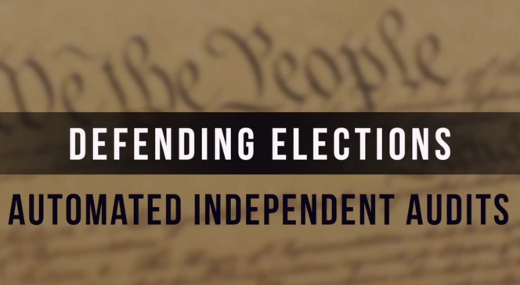
As I write this post, it is almost 2 weeks after the 2022 US midterm elections. There are still races that have not been certified, ballot recounts in process and along with them a multitude of news headlines and speculation as to why all of this is happening. Outside of the news outlets and municipal halls, rumors and doubts circulate. Of course there are more races that have been tabulated and certified with candidates declaring victory and their opponents conceding, yet those contests are not the “breaking news” as those still outstanding.
But does that have to be the case? Can ballots be counted and confirmed with confidence and within a reasonable amount of time to not cast a shadow on the overall process? The answer is yes, as this is already being done and has been done for years thanks to a sophisticated technology solution that isn’t getting headlines like it should.
Making Voter Intent Clear
Several years ago I had the good fortune of working with Larry Moore at a firm he was leading. At that point he was already a tech pioneer and visionary. His door was always open when I had a question or challenge and he was able to help me see things from aspects I hadn’t even considered. Later we later reconnected and I learned about technology he envisioned and with a great team brought to life to help solve the issue of voter intent and integrity. The company he founded was Clear Ballot and the technology involves scanning paper ballots and using advanced software to count both votes and voter intent. Think of how a ballot looks and if someone didn’t fill in an oval correctly or maybe circled the name instead of filling in the pesky oval, and this is what the software helps determine, with human reviewers, to properly audit an election.
Even as I re-read what I just wrote I know I am not giving this proper justice. Fortunately Larry recently produced a video where he describes the problem most are aware of and the solution most are not. The video “See the Vote - Fight Disinformation” is embedded below or click here to watch the video on this voting technology.
Deconstructing Defending Elections
It is beyond cliché to say how technology has positively impacted out lives. However as a result of issues with voting and certifying elections over the years, the prevailing thought of paper ballots and hand-counting, with all of their own challenges, has been the direction to insure elections are fair and accurate. I hope this video shed light on how technology has, can and will be a positive force in election integrity.
This is from The Hot Iron, a journal on business and technology by Mike Maddaloni.
Did you enjoy this? Subscribe to The Hot Iron by RSS/XML feed or Read by Email
Strategize • Technology • Thrive • (0) Comments • PermalinkDomain Name Horror Stories For Halloween
By Mike Maddaloni on Sunday, October 30, 2022 at 09:26 AM with 0 comments

There's no better preparation for Halloween like good horror stories. A few years ago I shared some spooky stories of Web site content horrors. So forget getting trapped in a car and hearing scratching sounds on the roof, as these stories of misadventures with domain names will certainly curdle your blood! Names have been changed to protect the innocent... and frightened.
Gone Killin'
Preparations were going well for the launch of the new Web site. In our weekly meeting we agreed we could confidently schedule a launch date and all marked our calendars. When launching a new Web site with different hosting than the current site, changes are required to the domain name settings (DNS) of the domain name. In the case of this client, the domain name was managed by their current hosting vendor. Knowing this at the beginning of the project, I tried to convince the client to transfer the domain name to their own domain registrar account. Sadly, my advice was not heeded, and that decision almost came back to haunt them.
With the date in hand I contacted their current vendor, who was aware of the project, told him the date and asked for confirmation he could make the necessary DNS changes on the launch date. He acknowledged, though I left the call with a queasy feeling, one I felt after most conversations with their vendor. It was a combination of what he said and how he said it - always very casual and somewhat dismissive. "Yea, I can do that" with someone whom I've yet to have a track record with doesn't give me a lot of confidence, but it's the best I can work with. I decided to send multiple reminders leading to the launch, all of which he responded to in the affirmative.
On the launch day I contacted their vendor with the DNS change information – I sent an email and followed up with a call that went right into voicemail. The email had a read receipt request I never got. I gave it about an hour, and then called again, and got the same voicemail. In the interim, several times I checked if he just made the DNS changes and failed to reply to me, which wasn't the case either. I then called the client to tell them the situation. They were prepared for this as I had shared with them my gut feel on their soon-to-be ex-vendor. They then gave me his mobile number – he was a small operation - and I called, again with no answer. This was followed by a text message and another call, which was answered.
In short, he forgot he had to do this and since it was a nice day out he decided to go fishing. Where he called from had poor service plus he did not have a computer and as he was out on a lake. But he said he would be able to take care of it later in the day, the time depending on how well fishing was going. After I hung up I decided I still needed my phone and throwing it across the room was not prudent. I called the client back and told them my news, to which they reluctantly accepted as we both knew we were at his mercy.
Later in the evening he made the changes though he did not call to tell me he did it. In subsequent days, after the shiny new Web site was up and running, I later facilitated the client transferring their domain name away from this scary vendor.
Frankendomain
As I monitor domain names and Web sites for my clients, I was alerted a Web site went down, and upon further review I found the domain name had expired. Unfortunately this is a common occurrence, but one that can be quickly remedied by logging into your domain registrar account and renewing the domain name. That is, if you can log into it.
Right away I emailed and called the client and advised them of this, and offered my help. Later I heard back from them that they were not able to login, as their domain registrar account was challenging them with two-factor authentication and it was trying to text the code to the previous head of the firm who was let go under less than acrimonious circumstances. After that leader had left, nobody bothered to change the contact information on the domain registrar account, and thus their peril.
The quickest way to resolve this issue was to get a hold of the previous leader and ask them to send an authorization code when texted to them. The chairperson of the firm tried this to no response (maybe as they were the one who let go that person had something to do with it?). What to do next?
Following that failed Plan A, Plan B was to contact the domain registrar, explain the situation and submit payment over the phone so the Web site would come back to life, then try to retrieve the login account later. For some strange reason I was never able to understand, they wouldn't take payment over the phone - we weren't trying to take over the domain name, just reactivate it. They said the only real Plan B was to reclaim the account.
Reclaiming a domain name account is something I personally have been through too many times myself, as it is a straightforward but long, arduous process of submitting paperwork proving who you are - individually and as an organization. This typically requires items like a copy of your driver’s license, IRS EIN letter which lists your tax ID number, articles of incorporation, state or federal licensing information, et. al. With this proof, you should be able to get back the account within a few weeks. Yes, weeks - which meant the site would be down that long.
But there was a wrinkle, a huge, ginormous wrinkle - the firm did not have a copy of its IRS EIN letter. They knew their EIN number, but didn't have "proof" of it in their vital records file (well, I never asked them if they had such a file, as I did when I had my own business, but I digress). They then contacted the IRS in order to get one. Now here's where the ginormous part comes in - this was June of 2020, the country was in the midst of lockdowns, the IRS was working remotely and not issuing anything in paper form or digitally for that matter. In short, the firm was not able to prove who they were!
After learning this, I contacted the domain registrar myself, explaining the situation and asking if we can simply make a payment. They refused. What? I was pissed. I won't say what I said to them, but it wasn't civil. I slammed the phone down and vowed bloody revenge. But we still had a domain name to deal with, and it was getting close to the 30 days after it expired. Why was this important? At the 30-day mark the domain name would be listed for auction by the registrar as an abandoned domain name, and 15 days later it would go up for auction.
Thus Plan C was crafted to "win" the domain name auction and get the domain name back. Yes, it meant a month and a half of the Web site being down. Sure, we could have gotten a new domain name and started over, but then search history and SEO gained over the years would be lost. Plus I have never, EVER lost a domain name and was not about to now, lockdowns be damned! I explained all of this to the chairperson of the firm, who agreed with the approach and authorized the expense.
Daily I monitored the domain name until the auction took place, and let the games begin. I previously registered as a bidder with the registrar, and then entered the auction with a low entry bid. I forget the set duration of the auction but it was maybe 30 minutes to an hour. As the domain name was a longer, unique name, I did not expect many if any additional bids. Interestingly with about 10 minutes left in the auction a few additional bids came in, which I quickly outbid. Some registrars have been accused of having staff bid in active auctions to drive up prices, but I don’t know if this was the case here. In the end I "won" the auction with a high bid of around $30, but with all associated fees it went just over $100. Within a day I had the domain name in my personal account at that registrar and the Web site was once again alive.
After the 60-day transfer hold following the auction I transferred the domain name back to the client, but in a new registrar account with a different registrar with their new and accurate contact information. Where the registrar that refused to help gained from the auction process, they lost a customer for life.
Deconstructing Domain Name Horror Stories
The tales told here were indeed scary, but in both cases certainly avoidable. You should always have your domain names in an account you control. Setting a couple of calendar alerts and verifying the login and contact information on a domain registrar account semi-annually is the largest hurdle. Logging into the account and setting a domain name on auto-renew and verifying the credit or debit card will not expire before the auto-renew date will ensure the annual renewal happens. You can even extend the registration out a decade so you don't have to pay for a while. All of these steps will ensure you have no domain name skeletons in your closet.
This is from The Hot Iron, a journal on business and technology by Mike Maddaloni.
Did you enjoy this? Subscribe to The Hot Iron by RSS/XML feed or Read by Email
Domain Names • Strategize • Technology • (0) Comments • PermalinkHow Low Can You Go
By Mike Maddaloni on Wednesday, August 03, 2022 at 10:36 PM with 0 comments

On a family road trip to Yellowstone National Park and Mount Rushmore a few years ago we included a stop in Sioux Falls, South Dakota. The decision to make a layover there was due to several factors including its position along our journey, interest to see the eponymous falls of the city, as well as the fact that we once considered moving there.
The following is a tale of potential opportunity, deception and emotions as part of a career change. Names have been suppressed to protect the offenders.
When I was at a crossroads over the direction of my career among the channels I was exploring was postings on LinkedIn. One day such a listing caught my attention – a Director of Technology for an organization in the Greater Minneapolis / St. Paul, Minnesota area. Leading tech in an org in an area where individually both my wife and I had once considered living, plus an area where we had friends and not too far from our then home in Chicago, it seemed logical to consider. Before even checking with my wife, I applied. Granted I told her later that day and she was encouraging of my choice.
Within a few days I heard from the human resources / recruiter, and their message started as typical about receiving my application and interest. It then pivoted in a way I was not expecting. The recruiter said the position was actually in Sioux Falls, South Dakota. They continued that they had problems finding candidates for positions in the past, and thus had advertised it as being in the Twin Cities. Their message concluded by asking if I was still interested.
To put this revelation in context, it is approximately 237 miles from Minneapolis to Sioux Falls, with a driving distance of close to 4 hours. To say that Sioux Falls is in “greater” Minneapolis/St. Paul is like saying New York City is in “greater” Boston! Look on a map if you don’t believe me, but certainly nobody would ever say there’s such a tie between the Big Apple and the Hub.
This was the first deception, and though I say that today I didn’t necessarily say that then. Looking at the description of the role, and with a few other questions answered and in consultation on the home front, I decided to move forward with my candidacy.
This forward motion included further discovery about Sioux Falls and took a two-prong approach – by reaching out to the local chamber of commerce as well as our dentist who was from that area and still had strong ties with it. Again this is discovery – could we consider relocating there, and what were factors to consider. After reviewing materials received and a few conversations, we decided I should continue the interview process. To be honest my wife and I moved to Chicago with less research on the city than we did on Sioux Falls, but that being said Chicago is a much, much different city.
That next step was an interview with the hiring manager, who was the Director of Marketing and whom this role, the Director of Technology, would report to. The Marketing director was part of the parent organization of this new one, and was to move over into this org. Where some may have thought this in itself as a red flag, I didn’t. Over the years I have seen various configurations of organizational structure and have had clients who were in similar roles and I worked well with them. So in a smaller org, I did not see this, in itself, as a concern.
Then came the interview, which would be done over the phone – remember this was over a decade ago, and video interviews weren’t as common as today. I prepared as best as I could for an interview with a Marketing director, including questions that would determine to me their knowledge of technology as well as other factors such as goals, budget, staffing, etc. I also anticipated questions that may be posed to me and appropriate answers for the level of Technology director.
When the phone rang, I popped into an empty office in my co-working space and took it standing, wearing a headset and holding notes in one hand and using the other for note-taking and being expressive! The Marketing director seemed a little hurried in their banter at the beginning of the call, and then asked me to tell me about myself. As I talked about the breadth of my experience, they cut me off at one point and asked me about something I just mentioned, specifically about email marketing. I proceeded to describe how not only have I setup email campaign platforms for clients but also had developed a product offering around email marketing. Again I was interrupted and asked about details of what I did for clients, and talked about developing goals to tactical email templates as well as managing their email lists. Again, I was stopped midstream and they asked for more specifics about how I setup the lists, to which I talked about working with the customers as to whom opted-in to receive email, and once again I was stopped. They then asked if I could populate an email program with email addresses, to which I replied yes, but it seemed the word took a while to come out of my mouth as I started thinking hard about where the line of questioning was going. They then asked if I was able to take email addresses from different kinds of files and put into one database. At this point I was confused and asked why they were asking questions about this level of work for a position that had Director in its title.
The reply was not what I was expected, where the interviewer asked, “I need to know how low can you go.”
It was that one statement that made the ambiguity I had of the call crystal clear, and exposed the second deception – this role was not at a Director level, rather it was for a marketing or technology analyst at best. There is nothing wrong with those roles, but that’s not what I do or bring to the table, not to mention where I was at in my career. You may as well be asking a brain surgeon to put bandages on skinned knees! I then somewhat tuned out the ramblings of the interviewer and told them I am not the person they are looking for, and thanked them for their time. I was polite on the outside but infuriated on the inside. The HR recruiter had followed-up with me and I chose to take the same high road with them too – I didn’t have to and my inner Italian wanted me to let them have it. But I did not, and don’t look at that decision with any regret.
In the end, what was presented as a job I would have to move several states over for was a job I wouldn’t cross the street for!
Other than my wife I only followed up with our dentist and told him about the debacle to which he was sorry to hear. Where over the years I have had poor to bad experiences with recruiters and HR departments, this was and continues to be the worst of my multi-decade career. And I hope it is never superseded by anyone or anything else.
Deconstructing Deceptive Recruiting Practices
We all face challenges in life and work that sometime seem insurmountable. It is in these times that creative, fresh ideas coupled with openness and honesty are needed to achieve our goals. Using deception and justifying it in the name of the challenge is not only wrong, but can have unknown repercussions on you or your organization. Where I let this one pass me by, someone else could have taken this to social media and caused a problem for the upstart organization. Taking a 360 degree view on their decisions, and considering the candidates for this role, could have avoided all of this.
This is from The Hot Iron, a journal on business and technology by Mike Maddaloni.
Did you enjoy this? Subscribe to The Hot Iron by RSS/XML feed or Read by Email
Business • Strategize • Thrive • (0) Comments • PermalinkSubscribe to The Hot Iron



The Hot Iron strives to present unique content and point-of-view on business, technology and other topics by Mike Maddaloni, a technology strategist based in Appleton, Wisconsin.
Photo credit: Logan Connor/Oomphotography
Value for Value
If you like what you are reading on The Hot Iron, buy me a coffee!
About Links
In posts here at The Hot Iron there are often links and banner ads for products and services. For some of these links and banner ads, I receive compensation if you click and/or eventually buy said products or services. Where most links are marked as such, it is safe to assume any link or banner ad is a compensated one.