
My Takeaways From The Book Limitless
By Mike Maddaloni on Tuesday, September 29, 2026 at 10:52 PM with 0 comments
While you’re reading this, play All In My Mind by Love and Rockets in the background for ambiance.
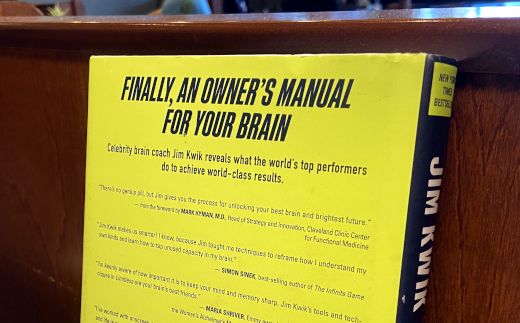
There’s no shortage of self-help books out there, and proof of that is the many I have read myself and wrote takeaways from here at The Hot Iron. Many of them talk of systems you can use to better optimize your life. But what are you optimizing from a base of? Do you even have the capability to take on all those things? Is there something holding you back or limiting you? This is the premise of the book Limitless by Jim Kwik.
Kwik, which he emphasizes is his real name, is a self-described brain coach. While not a doctor, he developed techniques he used to on himself following a traumatic brain injury as a child and now coaches on others on optimizing their brains, and thus themselves. The book was recommended to me years ago by my friend Eric and I read it a while back and also used it for a book club at work, and am finally getting to writing up my takeaways (for those who may question my brain performance, I took copious notes, listen to Kwik’s Limitless podcast weekly and re-reviewed the book for this post!). Here goes.
Being limitless won’t just happen – Like anything worthwhile, you need to put in the work, or “lock in” as my kids say. Kwik’s Limitless Model is a tripartite of Mindset, Methods and Motivation. Where he gets into this in much detail, on the surface these concepts are easy to understand, and hard to implement on a consistent, long-term basis. You need to be all-in mentally, come up with methods so that you have routines for achievement, and a system of motivation – the latter for me tends to be as much externally sourced as internally.
Tons of tips, but too much? – It wouldn’t be a self-help book without these, and there’s many of them. One that I already use (on and off) is the Pomodoro method, using my timing cube to work in dedicated bursts and regular breaks. There’s also three magic questions: how can I use this, why must I use this, and when will I use this? Kwik also uses acronyms like “HEART” goals – healthy, enduring, alluring, relevant, truth. The acronyms are used as way to help remember the elements.
Finding what works for you – With all in this book, and like anything, taking them on all at once is not practical. Kwik also offers and gives some basics on a speed-reading technique; sure I could be a faster reader, but do I read fast enough already? Where it could help me (especially in a world of verbose AI-generated slop documents) there are other areas to improve that would be more beneficial, like remembering the names of people I meet and not forgetting them seconds later.
As it’s been a few years since I got the book, Limitless has a newer, expanded edition that includes using AI (of course!) however these takeaways are based on the original. I enjoyed Limitless, as Kwik presents it in an easy-to-understand manner. The challenge for me is the second M of the Limitless Model – methods, as it requires the discipline of scheduling and reviewing. That being said, the book is aspirational and one I recommend if you are looking at self-improvement at a core level. As to what I will do with this copy, I am giving it back to my wife, as I took it from her bookshelf after she originally took it from mine.
This is from The Hot Iron, a journal on business and technology by Mike Maddaloni.
Did you enjoy this? Subscribe to The Hot Iron by RSS/XML feed or Read by Email
Book Take-Aways • (0) Comments • PermalinkTime Doesn’t Fly
By Mike Maddaloni on Friday, September 11, 2026 at 01:17 AM with 2 comments

AI-generated image of timepieces walking
As you start reading this post, do play this classic song in the background, Time in a Bottle by Jim Croce.
Most people reading this have certainly heard the expression “time flies,” let alone saying it many times themselves, this week alone. Of course we all know that time truly doesn’t “fly;” the concepts of the science behind key scenes from the Back to the Future movies and Harry Potter and the Prisoner of Azkaban certainly haven’t been available to the masses to say the least. Yet we use this phrase anyway.
The idea of time passing by quicker than it should be comes up quite a lot recently in my household, as my oldest child has recently left the proverbial nest for college. We look back on the pictures of taking her home from the hospital where she was born, then it seems like next thing we know we are pulling away from the dorm we just dropped off said kid - now an adult, thinking and saying those 2 words over and over on the ride home.
It’s not that time truly flies, of course, rather it’s that we are thinking of other things through the days of our lives, then when we return our thoughts to something, and it's as though certain events happened without our knowledge. When I was driving my kid to 5:45 am swim practice 30 minutes each way, memories of elementary school musical performances certainly were not top of mind, rather that the Starbucks by the pool was properly staffed to continue my morning caffeination routine. I could go on, but you get the idea.
Some Days to Stop and Remember
Today, September 11, 2026, marks 25 years since the terrorist attacks on the US. I have written about how I reacted that day and details I remember before, and honestly I don’t have much more unique I can add to it. But I am thinking about it this week – something I don’t think about that often any more. Well, there is the exception when I drive from my home south to the Milwaukee, Wisconsin area and I always see a sign for a Wisconsin 9/11 Memorial off the next exit. As I am always taking this route because I have to, I never have extra time to exit and visit it. Sure, it’s on my list of things to do, but I will have to take a special trip there. Nonetheless I am thinking a lot about what happened that days and what followed, especially about the people I know who were directly impacted by it.
Also a quarter-century ago was when my Mom died, taken far too early by an autoimmune disease. There are many times I think of her, from when I am writing down one child's name whose middle name is hers, to pictures around the house to sometimes wondering what she would think of just about any struggle I am going through. Again it's not all the time, but enough that she lives on in my mind and heart.
Roll With The Changes
Perhaps it's ok that things are this way. Think about it - we can't think about everything all the time, and if we could we'd likely go crazy. Until said time travel hardware is readily available, it's not like we can physically - as well as mentally - achieve it. We can savor the moment, and appreciate the past and look forward to the future, even though it seems like it's here before we think it should be.
Before I close, I have to admit that when thinking of the opening song, the first one that came to mind was If I Could Turn Back Time by Cher however I didn't think it quite fit the tone of the post. As I may second-guess my decision eventually, I am sharing the link to it too.
This is from The Hot Iron, a journal on business and technology by Mike Maddaloni.
Did you enjoy this? Subscribe to The Hot Iron by RSS/XML feed or Read by Email
Diversions • (2) Comments • PermalinkMy Favorite Adam Vinatieri Memory
By Mike Maddaloni on Monday, September 07, 2026 at 06:52 PM with 0 comments
One of the 2026 inductees into the Pro Football Hall of Fame was Adam Vinatieri. His well-deserved entry followed a 24-year career in the National Football League kicking with the New England Patriots and Indianapolis Colts, including 4 Super Bowl championships and numerous clutch game-winning kicks through the uprights.
His rise to fame was built on hard work and a steady foot and of those key games were many that helped the Patriots win their first Super Bowl. As a fan of the Patriots and someone who saw many of those games in person, I have many memories of who some call the GOAT – or greatest of all time – of kickers. Reflecting on his playing career, which one, though, is my favorite?
Interestingly my favorite memory of number 4 is not from any game; it’s from meeting him in a supermarket parking lot.
It was a fall day in the late 1990’s (my recollection of the actual date is a little fuzzy almost 30 years later, but the details of the event are surprisingly vivid!) and I was driving home from my consulting assignment in downtown Boston listening to WBCN, the rock station that was the radio home for all Patriots games. The DJ came on to say that there was an event at the recently-opened Stop & Shop supermarket in the Allston neighborhood of Boston, just as I was passing by it on the Mass Pike. At the event there were to be free hot dogs, an appearance by New England Patriots cheerleaders as well as the team’s kicker Adam Vinatieri. Hearing about the latter, I made the complicated trek from where I was heading on I-90 to Allston. Forget the free eats and cheerleaders, I wanted to meet Adam.
When I got to the store, there was a giant mob at the side parking lot. Ugh, I clearly was not alone in wanting to meet the placekicker. Or so I thought. As I approached the large crowd, however, I saw they were in front of the tent queuing for the hot dogs. Phew! I looked beyond this tent and saw another large crowd. As I approached it, another tent was for the cheerleaders, and they were signing mini posters featuring their entire squad. I thought it would be nice to get one for my friend Clint’s young daughter; he and I have been tailgating for Pats games for years and we started a fan Web site GoPats.com a few years earlier. The cheerleaders gladly signed a poster for her, but when I asked for one for myself, I was sternly told only one per person. Whatever.
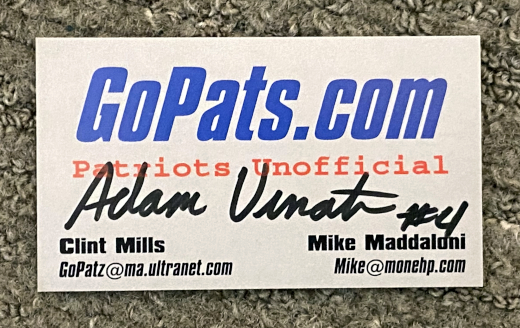
As I left that tent I saw another, much smaller, next to it with a couple of people under it, one sitting at a table, with only a few people around. I was surprised, as that was where Vinatieri was. Why nobody else was flocking to see him was beyond me, but it gave me an easy opportunity to meet him. When I got there I shook his hand, exchanged pleasantries and made some small talk about the Pats season was going. I recall they were coming off of a loss and I didn’t want to piss him off. Of course, for anyone who knows me and my relationship with sports, small talk is about all I am good at – I have never been someone who remembered every play of the game or had any idea what they should do next, but I digress. He was very pleasant and we had a nice short chat. I then opened my wallet and asked him to sign a GoPats.com business card that Clint and I had printed up to get some traffic to our little fan Web site; remember it was the 90’s, promoting the Web in print was something you would do!
Pictured above is that card, which I have held onto all these years, along with a few other autographed and non-autographed business cards from notable people. For years, starting as a kid, I actually collected business cards, similarly how people collect baseball or other trading cards. Those are long gone now but I still have a few including this one.
So why would a fan of a team pick a moment like this as their favorite for an athlete, and not like the multiple Super Bowl wins or that kick he made in the infamous Snow Bowl game at old Foxboro Stadium that I was at? Simple - it’s personal. Sports, or anything for that matter, can mean different things to different people. It’s not that the other events aren’t important, rather this has unique meaning to me. Where the date may have blurred, the experience did not. Congrats to you Adam, a class act on and off the field, and I can vouch for both.
This is from The Hot Iron, a journal on business and technology by Mike Maddaloni.
Did you enjoy this? Subscribe to The Hot Iron by RSS/XML feed or Read by Email
Diversions • (0) Comments • PermalinkMy Takeaways From The Last Honest Man
By Mike Maddaloni on Friday, January 23, 2026 at 09:01 PM with 0 comments
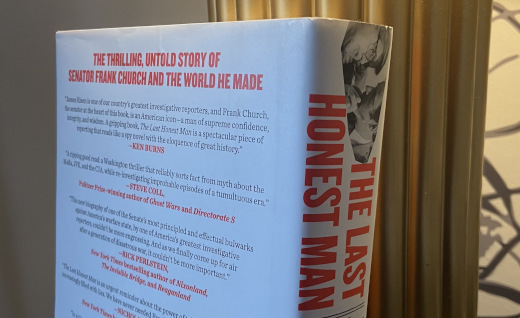
In recent years, many national politicians have said there needs to be “Church-like Committees” for various scandals that are swirling around Washington, DC. When I’ve heard this, I had faint recollections from my youth of when the original Church Committee was active, and the work it did in exposing the problems with the intelligence apparatus that seems to have an ever-growing grip on the US. It was this thinking that got me to pull a book off my shelf that I received as a Christmas present for my Mother-in-Law a few years ago that I never read, The Last Honest Man: The CIA, the FBI, the Mafia, and the Kennedys―and One Senator's Fight to Save Democracy, about the namesake of the Church Committee, the late US Senator Frank Church from Idaho.
This extensive novel by James Risen was based on just about every source available except for firsthand interviews of Frank Church himself, as he has left this mortal coil, including documents, journals, and interviews with others who were involved in and around the Church Committee as well as Frank Church at that time. As I read through the lengthy tome, many takeaways did come to mind.
What it takes to execute on checks and balances – As I was reading through the story which details the genesis of the Church Committee behind the scenes to the panels that was on television, I was in awe of all that was involved, from the extensive office to the numerous people and all they did. One thing not included in the book was how much it actually cost to pull this off, however money doesn’t seem to be much of an object to Washington, DC, especially when it’s not their own money.
A committee of presidential candidates – In addition to Church’s own short-lived candidacy for President of the United States, there were several other people on the Church Committee who did run for president, including Walter Mondale, and Gary Hart, with the former being Vice President to President Jimmy Carter.
Jethro‘s Dad worked on the Committee – Not something taken directly from the book, but around the same time I was reading it, I listened to an episode of Craig Ferguson‘s podcast where he interviewed Diedrich Bader, the actor who played Jethro in the Beverly Hillbillies among other roles. Bader said his father William was one of the lawyers who worked on the Church Committee. It’s a small world after all.
Was Frank Church truly the last honest man? – While reading this I always kept in the back of my mind its title and wondered to myself that, since Frank Church died in 1984, has their not been another honest man in Washington, DC? Where there certainly are not many who could claim this title, I would say former Texas Congressman Dr. Ron Paul and current Kentucky Congressman Thomas Massie fit the bill, in my humble opinion.
The Last Honest Man is an interesting and well-researched story, though it is hard to believe that what transpired actually happened (and happens) in the US. As for what I did with my copy of the book. I decided to leave it on an Amtrak train outbound from Chicago to Milwaukee. I hope someone got a chance to pick it up, get beyond its 400+ page size and (re)discover an interesting story about an interesting man in an interesting time.
This is from The Hot Iron, a journal on business and technology by Mike Maddaloni.
Did you enjoy this? Subscribe to The Hot Iron by RSS/XML feed or Read by Email
Book Take-Aways • (0) Comments • PermalinkThe Hot Iron Nineteen Years Later
By Mike Maddaloni on Wednesday, December 31, 2025 at 02:08 PM with 0 comments

AI-generated image of an iron bring struck while it is hot on a 19 anvil
Yesterday, December 30, 2025, passed by rather quickly and uneventfully. Perhaps it was due to the fact I have been off work for a few weeks to use unspent vacation time and the days have been a blur, or perhaps the end-of-year and family things we had going on... heck, it was a combination of all of that. For you see, the previous day marked 19 years that the blog you are reading this from was started.
If you scroll the archives at TheHotIron.com you will see I have written a similar post every year. Sometimes it was shortly after another masterpiece went live, other times several weeks. Though I don’t write as often as I would like to, the ideas still flow and get captured on an ideas list, which is located adjacent to the stack of books to write takeaways from that is slowly getting smaller.
Where it could be taken that these paragraphs are merely a marker to say, “hey, I haven’t given up yet,” for me it is to celebrate how much I actually did write, especially with all that 2025 slung my way. I still enjoy writing, and any time I get to sit down and do so is a gift. Even the few minutes to crank this out – without AI – and to craft the prompt to generate the accompanying graphic with AI was pure joy.
Happy Birthday to The Hot Iron, and Happy New Year to you!
This is from The Hot Iron, a journal on business and technology by Mike Maddaloni.
Did you enjoy this? Subscribe to The Hot Iron by RSS/XML feed or Read by Email
Announcements • (0) Comments • PermalinkSubscribe to The Hot Iron



The Hot Iron strives to present unique content and point-of-view on business, technology and other topics by Mike Maddaloni, a technology strategist based in Appleton, Wisconsin.
Photo credit: Logan Connor/Oomphotography
Value for Value
If you like what you are reading on The Hot Iron, buy me a coffee!
About Links
In posts here at The Hot Iron there are often links and banner ads for products and services. For some of these links and banner ads, I receive compensation if you click and/or eventually buy said products or services. Where most links are marked as such, it is safe to assume any link or banner ad is a compensated one.