
I’m A Teacher
By Mike Maddaloni on Tuesday, September 27, 2016 at 11:35 PM with 1 comments

Who would’ve thought a wedding reception in Indianapolis would be where I’d realized something that has helped shape the path I’ve taken with my career?
It was following the wedding of my friends Jen and Bill at their reception where it happened. Bill was making a speech, and though I don’t remember it verbatim (sorry, Bill!) he began talking about teachers, as he is one himself. Then he asked everyone in the room who was a teacher to stand up.
And I stood up.
Not only did I stand up, but nobody snickered or asked me to sit down either. This is when I first realized I am a teacher.
Define Teacher
When I lookup the definition of the word teacher in my favorite book of words, it reads, “a person or thing that teaches something; especially: a person whose job is to teach students about certain subjects.” This is why I have never thought of myself as a teacher, namely as I have never had a title with the word “teacher” in it before. My job titles have had “consultant,” “manager” and “president” and other business titles – but never teacher.
As I look at my career present-day and past, I have always been teaching in some capacity. There is teaching in the formal sense, were I have developed training and offered classes in the US and internationally on Web application and their underlying technology, I have also developed Web portals to host and deliver these materials. Then there’s teaching in a more advisory role, where I am consulting with people on business decisions and how to apply technology to help solve them. In some cases I am coming in with the answer after strategizing on it, other times I am troubleshooting in real-time to come up with a solution.
In the above cases, teaching is pervasive. I’m not simply saying to a client, “do X,” rather I am explaining what “X” is, answering their questions on “X,” informing them about “y” and other letters of the alphabet, and ensuring they have all the information they need to make an informed decision.
Educating vs. Selling
Some of you reading this may be saying, “yea, but aren’t really selling something to people in these cases, not teaching them?” Part of that answer is certainly yes, but when someone or some corporation is shelling out a lot of money, they need to understand the why, not only from a pure dollars-and-cents point-of-view, but with regards to how to best leverage and use it among other aspects. Teaching of course is an important role for sales and account people too, not just for the technology strategist like myself.
This is of course not to say that everybody is a teacher (I don’t recall everybody standing up at that wedding reception). Many don’t like to or want to teach. Each to themselves, but for myself I have always found this as a very rewarding aspect of what I do, past and present. Not to mention making my job easier by working with a well-informed client.
Deconstructing Being a Teacher
There are many more people out there who are teachers than realize it. We always envision a teacher as someone heading a classroom in elementary or high school, and has the word “teacher” in their title. I am not saying I am a replacement for them, rather someone complimenting their contributions to society with my own.
And you can give me an apple anytime!
This is from The Hot Iron, a journal on business and technology by Mike Maddaloni.
Did you enjoy this? Subscribe to The Hot Iron by RSS/XML feed or Read by Email.


Business • Technology • Thrive • (1) Comments • Permalink
About My Deconstructions
By Mike Maddaloni on Tuesday, September 13, 2016 at 10:19 AM with 0 comments

When I started writing here at The Hot Iron, the name came from the expression, “strike while the iron is hot.” Though my entry into the world of blogging could be considered more functional than creative, taking burning topics – whether business, technology or personal – and boiling them down was far from anything new to me.
Much thought has gone into the direction of my blog lately, which is one aspect of the thought into my greater self. As I have considered the focus on what I write, I have also focused on how I write, namely in the approach I take with covering a topic. The product of this quest is what I am calling My Deconstructions.
What is a deconstruction? As I write here and elsewhere, I will strive to take my analysis and reporting on a topic and conclude it by breaking it down into essential points and conclusions. In some regards it will be similar to my book takeaways; rather than rating a book I share what I gained from the time spent reading it. In some cases it is a summary, and in others I look back on something I took from it and am surprised I came up with it! The deconstruction may be takeaways, action items, next steps, essential components, revelations or something else I haven't thought of a category for.
Like anything, I have already started writing these and will see how it evolves. As a reader, whether your first time or as a long-time one (and I know there's a few of you out there), I welcome your thoughts and feedback as this new approach appears in my future posts.
Deconstructing Deconstructions
Why shouldn't what I write about deconstructions have one itself? As time is always of the essence, taking the time to make or reiterate the main points from something is always useful to whoever is consuming it. It also helps the reader understand your main points, as you never want to assume someone has gleaned them from reading your work. In the end the reader – you – will say if these deconstructions are helpful, and please let me know in the comments to this post either way.
This is from The Hot Iron, a journal on business and technology by Mike Maddaloni.
Did you enjoy this? Subscribe to The Hot Iron by RSS/XML feed or Read by Email.
Announcements • Business • Strategize • (0) Comments • Permalink
My Takeaways So Far From The Book 1 Page At A Time
By Mike Maddaloni on Wednesday, August 10, 2016 at 05:08 PM with 3 comments
A consequence of being in a routine is that our entire body can be consumed by it. Where things like repetitive strain injuries or simply being sore from sitting on our butt for a long time are obvious, what isn’t as apparent is the impact on our brain.
If you don’t believe me, here’s an example – you are buzzing along in what you do all day and someone comes along and asks you a question, and all you can do is stare back dumbfounded. They may have well as used a Sharpie and wrote it on a pool noodle and hit you with it. Call it brain fatigue, but does it show a sign your brain needs some exercising?
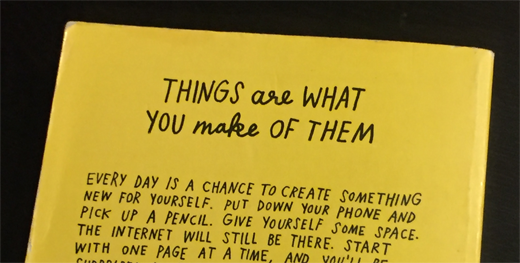
When I saw the book 1 Page at a Time – A Daily Creative Companion by Adam J. Kurtz sitting on the shelf at Judy Maxwell Home in Chicago, I couldn’t help but pick it up. (If you don’t know about this store, think Spencer Gifts with an old-world flair and a sharper edge; it’s also owned by actress Joan Cusack, so that adds to its eccentricity) It only took me flipping through the first few pages and I was sold. It is an adult workbook, with a page a day dedicated to a brief creative exercise to do in the book.
Each page presents a unique activity, from making a list to drawing a picture to whatever. Some are quick and easy, some require actual thought. As it’s a page a day, and I started late last year, I am not done yet – thus the “so far” in the title – but I have enjoyed every exercise so far.
Though I have much to go, I feel my takeaways from 1 Page at a Time will endure and be reinforced as I go through it.
Think Different – Borrowing from the infamous Apple tag line, this book does just that. It asks you to do things you most likely don’t normally do on a regular basis as part of your job or even for fun.
Challenge Yourself – As some of the activities have required me to sit back and ponder before putting pen to page, it’s been extremely helpful to have a challenge that is outside of my normal work and life challenges, which tend to be more technical, business and child-focused.
Draw – When was the last time you drew a picture? For the fun of it? This is probably why adult coloring books are all the rage these days. Where many of you reading this may not consider yourself an artist, the drawing I am talking about is not about being an artist. Rather, it is about expressing something with visualization.
On occasion a day or 2 go by when I don’t do a page a day, but then I catch up on them. I tend to do them in page sequential order, but there is no reason you can’t flip around and choose one at random. I never read ahead, as I like to approach these with some spontaneity.
I highly recommend getting a copy of 1 Page at a Time, or get 2 – 1 for yourself and 1 for a friend. If you have it and are using it, I’d love to hear what you think about it in the comments to this post.
This is from The Hot Iron, a journal on business and technology by Mike Maddaloni.
Did you enjoy this? Subscribe to The Hot Iron by RSS/XML feed or Read by Email.
Book Take-Aways • Business • Strategize • Thrive • (3) Comments • Permalink
2 Ways to Export Your LinkedIn Connections And Information
By Mike Maddaloni on Thursday, June 16, 2016 at 12:23 AM with 5 comments
 With the news this week of Microsoft acquiring the business social media site LinkedIn for US$26.2B, the first thought I had was, “gee, when was the last time I exported my LinkedIn connections and information?”
As you read that, you may have thought, “gee, I can export my LinkedIn connections and information?” Yes you can, and if you didn't know that 1) you are not alone, as many people are unaware of this, and 2) you still can do it, and I'll show you how.
After all, they are your connections
As you have built your connections and updated your information in LinkedIn, you have compiled a wealth of data over time. For many of your connections, you may not have their business card or any other record of them outside of the site. With LinkedIn's messaging service, you may have been in communication with someone without ever sending them a regular email message. Many people also keep their LinkedIn profile more current than their resume.
With the reality of our reliance on Web services like LinkedIn, this is not surprising. Fortunately they also offer the ability to export key data – your connections and other information it has collected on you, such as your profile. If you have never done it, there's no time like the present, and here's the quick and painless steps to execute these not-so-obvious functions.
Exporting LinkedIn Connections
Whether you have a handful or 500+ connections (LinkedIn will only show you the true number you have and nobody else for some reason), you have the ability to export them. When you perform an export, key information you'll get is name, current employer and title and email address, as most everybody has this information on their own profile. Name and email is in my mind most important as you have a way to reach them.
Here's the steps to follow to export connections.
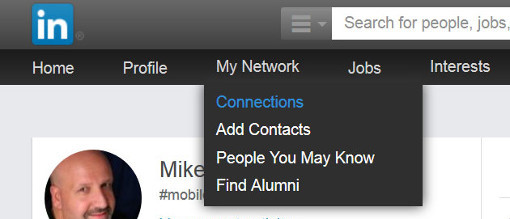
1. Log into LinkedIn using a Web browser and select Connections from the My Network menu.
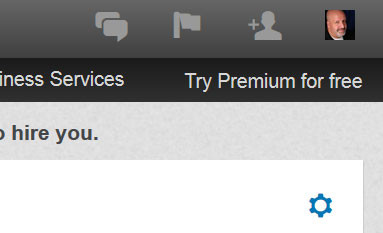
2. Click the gear icon for Settings on the right side of the screen.
3. Click the link “Export LinkedIn Connections” on the right column on the screen.

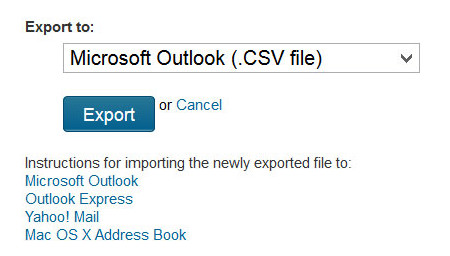
4. You have the option to select the format you want your connections in. I have always selected “Microsoft Outlook (.CSV file)” as this gives me a delimited file I can easily open in Excel or Open Office. The other formats may better suit for importing into another program or Web service. Once you select your desired format, click the Export button.
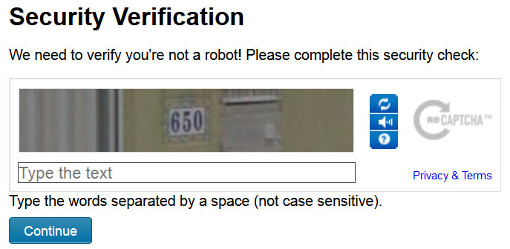
5. You will be prompted with a CAPTCHA for a “security verification” to ensure LinkedIn that you are a real human being requesting your contacts. Enter the CAPTCHA value and click the Continue button.
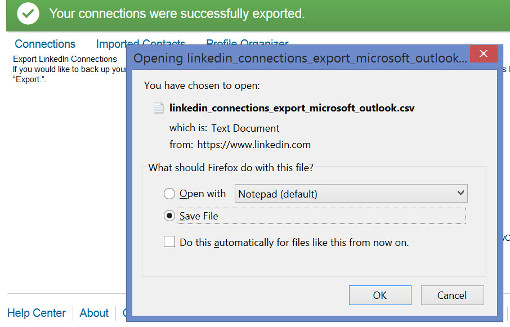
6. You will get a popup in the browser to save or open the file (the actual appearance of this will vary by browser). Make your choice, in this case I am going to save it.
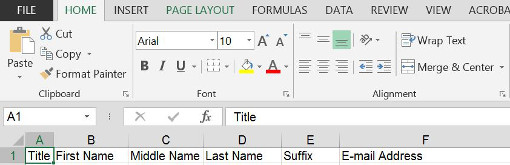
7. Open this file in Excel or your favorite spreadsheet and you can browse and process your contacts.
What you do with your contacts is of course up to you. Even if you have no immediate plan – or time – to do anything with them right now, you at least have a backup of the contacts your spent a long time curating.
Exporting LinkedIn Information
In addition to your contacts, you have profile information and activity performed on LinkedIn, such as messages, etc., which you can export as well, though you may have to wait at least 24 hours to get it. This is probably due more to load on their servers than an element of control (I hope!), but within a day you can get it all, and here's how to request and receive it.
1. Click on your picture icon at the top right of the screen and select “Privacy & Settings / Manage” from the menu.
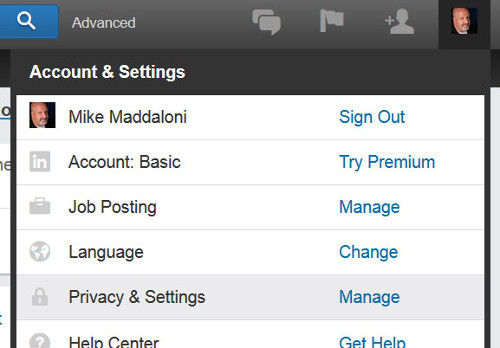
2. Scroll down the page and click the “Getting an archive of your data” link.
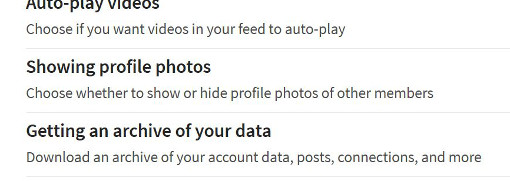
3. Click the button labeled “Download” on the right side of the screen.

4. Wait. The message on the screen will say you will receive an email within 24 hours. In this case I got 1 email with a partial file within a short period of time, and then within a day I got a second email with a link to the entire archive of information.
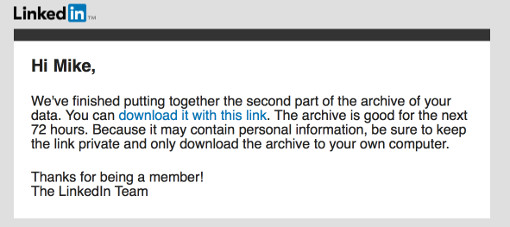
So what's in this archive Zip file? In addition to any images you have posted (your profile picture, banner, etc.) there are several delimited files in CSV format with everything from profile information to what you have searched on. Take a look!
Again, what you do with this – and when – is up to you, but it is yours, and now you have it in your digital hands.
Deconstructing Data Exporting
Since LinkedIn launched in 2003, many, including myself, assumed the service will always be there, every time we want it, as it has been. In the recent past it has added and even removed features, like Answers, where many posted a lot of information. Where it's their platform, at least they realize it is your information and make it available to you. With the unknown of the future, plus a future under Microsoft's ownership, why not get a copy of your LinkedIn information today?
This is from The Hot Iron, a journal on business and technology by Mike Maddaloni.
Did you enjoy this? Subscribe to The Hot Iron by RSS/XML feed or Read by Email.
Build • Business • Social Media • Strategize • Technology • (5) Comments • Permalink
Why Chicago Needs Dedicated Festival Grounds
By Mike Maddaloni on Monday, April 04, 2016 at 08:40 PM with 2 comments

The motto of the city of Chicago, Illinois is “urbs in hortu” which is Latin for “city in a garden.” The motto for Chicago is not “festum in urbs” or “festival in a city,” yet festivals large and small draw people to the city – to visit as well as to live – and contribute tremendously to the unique place it is.
It is the large festival concerts that of course draw the largest crowds, including myself. For me personally, there is nothing else like watching live music with tens of thousands of strangers, to say the least! As great and memorable as these festival concerts are – the likes of Lollapalooza, Pitchfork and Riot Fest – they also have an impact long after the last note is played and people leave, namely in the physical damage done to where the concerts are held, which is in public parks across Chicago.
The damage to parks is eventually fixed, and the cost is mostly covered by the concert promoter. However in 2014, the concert and amusement festival Riot Fest, which called the city’s northwest side park Humboldt Park its home for the past several years, was denied a permit to return there after neighbors complained about damage not completely repaired and other issues related to crowds. The 2015 concert was held on the other side of the city in Douglas Park.
I can understand the issue of park damage. Lollapalooza, the annual concert that consumes Chicago’s Grant Park along Lake Michigan, takes most of the park out of commission – including use for locals – for many weeks to repair the damage, which in their case and for Riot Fest is usually due to rain and millions of footsteps wrecking grassy areas which need to be replanted or resodded. It’s not only an inconvenience, but people are denied access to a park they pay for with their tax dollars.
While existing spaces and places make a great setting for concerts, namely in aerial photos of the crowds, a solution that could make everybody happy – from concertgoers to neighbors – would be a permanent festival location for such events.
Dedicated festival grounds
What you say, Mike, build out an open space for multi-stage concerts or other large festival activities and events? Yes, I am, and allow me to make the case for such a venue.
There’s plenty of space in Chicago. If you’ve ever traveled across this fair city, whether by train, car or even over it by airplane, there is all kinds of “vacant” land across the city. I use “vacant” in quotes as clearly someone owns it. But it is there, and not being used.
This is not an original idea. The concept of space for events is nothing new. The Midwest is dotted with fairgrounds, with indoor and outdoor facilities. Growing up in Massachusetts, the Eastern States Exposition grounds hosted not only the Big E, the annual 6-New England state fair, but events large and small throughout the year. Also, about 90 minutes north of Chicago is the Summerfest grounds along lake Michigan in Milwaukee, Wisconsin, which is designed and used for varying sized events.
Can be designed for its use. By building out a space for such events, it can be designed for multiple stages and the crowds that will stand and watch them and walk around, ideally not on grass but asphalt. Not to mention having some “permanent” fixtures like real bathrooms! Perhaps the event organizers, including Lollapalooza’s Perry Farrell, could have a say in its design too?
Can be designed to scale. Not all concerts and festivals draw the same size crowds, and the venue can be designed and built to accommodate different sized crowds.
Better accommodations for inclement weather. It’s rare than a little rain (or a lot) doesn’t fall on an outdoor festival event. This can be factored into the design of the venue with shelters and indoor facilities.
Better offering of VIP services. In addition to general admission tickets to such events, VIP tickets are more and more commonplace. Designing this into venues can provide a greater experience, at a greater cost, for VIPs, which can contribute more to the cost of the venue itself.
Better transportation planning. Or maybe simply “transportation planning” as such a venue would have planned transportation options – not to mention working in public transportation, paths and parking to accommodate it?
For all of these great reasons, it doesn’t mean that it will just happen. Especially in a city like Chicago, with burgeoning deficits, its politics and everything else making headlines, it could take years for something like this to ever happen. Plus, the city has a long history of hosting great events with little physical traces of them years later, such as 2 World’s Fairs in 1893 and 1933.
But nothing is ever easy, and because of it, it doesn’t mean we shouldn’t think about it. “Make no little plans. They have no magic to stir men's blood and probably will not themselves be realized.” was a quote from Daniel Burnham, the famous Chicago architect and author of the Chicago Plan, a design for the city that was implemented in part, just like there would be some compromise on such a venue.
Could this happen in Chicago? Should it happen? Does the city have more pressing priorities? I welcome your thoughts and opinions on my idea in the comments of this post.
This is from The Hot Iron, a journal on business and technology by Mike Maddaloni.
Did you enjoy this? Subscribe to The Hot Iron by RSS/XML feed or Read by Email.
Build • Business • Strategize • Thrive • (2) Comments • Permalink
Subscribe to The Hot Iron



The Hot Iron strives to present unique content and point-of-view on business, technology and other topics by Mike Maddaloni, a technology strategist based in Appleton, Wisconsin.
Photo credit: Logan Connor/Oomphotography
Value for Value
If you like what you are reading on The Hot Iron, buy me a coffee!
About Links
In posts here at The Hot Iron there are often links and banner ads for products and services. For some of these links and banner ads, I receive compensation if you click and/or eventually buy said products or services. Where most links are marked as such, it is safe to assume any link or banner ad is a compensated one.