
Sharing My Travel Checklist
By Mike Maddaloni on Friday, October 18, 2013 at 10:32 PM with 1 comments
There once was a time I traveled so frequently for work that I had no time to think about what to pack. These days I travel so infrequently that I always forget what to pack. Both situations had one common denominator – my travel checklist.

What started out as an on-going list so I wouldn’t realize I forgot something when I got to my destination became an essential tool for every travel excursion, from overnight to weeks at a time. Whether I’d print it or simply reference it after I packed, the checklist has been invaluable to me for years.
Perhaps it will be to you as well, which is why I have decided to share it. You can get your own copy of my time-tested, evolved travel checklist in PDF format here. Go ahead – take it, edit it, adapt it for what you need for yourself or others and use it. You can see it is geared towards an individual male, but you can add whatever categories or accessories you need for yourself, partner, kids, pets, electronics, etc.
If this travel checklist comes in handy for you, please let me know in the comments. If not, any critique is also welcome as well.
This is from The Hot Iron, a journal on business and technology by Mike Maddaloni.
Did you enjoy this? Subscribe to The Hot Iron by RSS/XML feed or Read by Email.


Announcements • Strategize • (1) Comments • Permalink
Divvy Bike Sharing In Chicago Needs To Offer Helmets
By Mike Maddaloni on Sunday, October 13, 2013 at 10:28 PM with 1 comments
Chicago is all about bicycles. From casual riders along Lake Michigan to people taking their bikes to work every day to everyone in between, there are bikes all over the streets and trails in the Windy City. This intensity has been raised in the past few months since the Divvy bike sharing program has started.

Take a look at this picture and see if you can see – or not see – what I don’t see. This gave me my idea. With additional inspiration from a recent safety video contest that Divvy ran, as well as the upcoming Chicago Ideas Week, I’d like to share and detail my idea for the Divvy program.
First What is Divvy?
Divvy is a service owned by the City of Chicago and run by a commercial third-party company that offers similar services in other cities. The idea of bike sharing is for taking short bike trips around the city, where you rent a bike from one bike station location, as pictured above, and return it to another. The keyword is “short” as you have 30 minutes to go from one bike station to another. You can pay US$7 per day to use a bike for unlimited 30 minute trips, or you can also buy an annual pass to use the service daily.
The bikes themselves are also custom designed, 1-speed bikes with lights powered by pedaling and more rugged than a standard personal bike. The front wheel locks to the station until it is rented. The seat is adjustable and there is a front rack for carrying items. All bikes have fenders covering both tires to keep you drier in the rain, and are light blue, matching the color in the Chicago flag (with the exception of the one red bike).
Divvy Bikes Are (Almost) Everywhere
Since their rollout, barely a block goes by without the sight of a Divvy bike in motion. Though the intended market for the service is city residents, tourists have been renting them as well. The tourist element may not have been anticipated as there have always been options to rent bikes, carriers and even get helmets from the rental shop. For as bike friendly as Chicago is, bikes are often playing a dangerous game with cars for the same street real estate throughout the city. Where marked bike lanes and even some with dividers exist, they are not everywhere, and many say not as much as are needed.
As you may have guessed by now, there is one thing missing from the Divvy bike program – bike helmets.
Divvy just rents bikes, it is up to the rider to get their own helmet, as is stated in the user agreement on their Web site. However, there are not many retail locations in the city where you can buy helmets. With the launch of a social media video safety campaign the lack of a helmet offering represents a huge missed opportunity.
What Would Have Been My Entry In The Divvy Safety Contest
This would have been my submission for the Divvy safety video contest, a 6-second video I created with Vine. Had I gotten to this earlier, I would have submitted it, but alas I missed the deadline. It’s embedded below, or follow this link to view my Divvy bike helmet video on Vine’s Web site.
Some Realities Of Helmets
Before I get into details on the offering of helmets, a little setup first. There is no law in Chicago or Illinois mandating the wearing of bike helmets, and I am not advocating one. Personally when I ride a bike, I always wear a helmet, especially as I once flipped my bike and I was glad I was wearing one! As one who believes in helmets, coupled with the Divvy user agreement stating you should wear one, there is an economic opportunity being missed by not offering them, not to mention the potential safety issues with tourists who may not know where they are going meandering the streets of Chicago.
If you look at the above photo and video again, you will see the Divvy bike stations are designed to dispense bikes, and not helmets, which poses its first challenge. Another challenge comes with the various sizes of helmets needed, as a helmet should fit snug on your head to be effective. Finally, if you are going to reuse a helmet it should be disinfected (think bowling shoes!) or each person would get a new, unused helmet.
Challenges as they may be, I see a couple of approaches to handling – or plain out selling – helmets, both in the short term and long term for the Divvy program.
People-Powered Sales
You don’t have to go far in Chicago without someone trying to sell you something. From the legitimate sales of newspapers and the Streetwise magazine (which I had a previous idea on, but I digress) to people hawking water, self-made CDs or pure panhandling. Why not have people sell helmets direct to riders as select Divvy stations?
The setup for selling helmets can be simple – wheeled duffle bags full of varying sized helmets, mobile devices with Square-like credit card swiping done by a person wearing a Divvy shirt. If sales of helmets are brisk, inventory can be replenished by the already on-the-road Divvy vans which are restocking bikes at certain stations.
Innovation For The Long Term
You may have seen vending machines selling electronics or other items at airports, train stations and even rest stops on highways. There is even an “ATM” in Chicago that vends cupcakes!

Why not a vending machine selling helmets, integrated into each Divvy bike station?
As Divvy bikes and the stations were engineered for their use, so would the bike helmets and the vending machine. I envision a unique helmet designed so a large quantity of them can be stored in a vending machine. The helmets may also be designed to be adjustable so that fewer sizes are needed? I don’t know the answer to how this would work, but I bet there is an engineer who could figure it out. The vending machine itself would be designed to not take up much space and integrate with the current purchasing function of the station.
Beyond The Helmet
As the typical cost of buying a helmet is more than the cost of a daily rental of a Divvy bike, marketing and sponsorship opportunities could decrease the cost of helmets. Would Nike or Groupon or PNC Bank pay money to put their logo on what is in essence a traveling billboard around the streets of Chicago?
And while they’re at it, where are the ads on the bikes themselves? It would certainly contribute to what is in essence a taxpayer-funded program.
Take My Idea Please!
Though Divvy is still a few months old, it has great popularity and exposure. My idea isn’t the only one out there for the service – this story is on an app created by a Chicago resident for logging miles, but was taken down as it violated the Divvy terms of service. Of course if Divvy made available – or even sold – data or the capacity to access it via an API, then there could be even more innovation and potential revenue.
As I myself am in no position or have the time to act on this idea, go ahead and take it and run with it. All I ask in return is a pat on the back and maybe the first helmet off the assembly line.
I also welcome your feedback – and ideas – in the comments of this post.
This is from The Hot Iron, a journal on business and technology by Mike Maddaloni.
Did you enjoy this? Subscribe to The Hot Iron by RSS/XML feed or Read by Email.
Business • Strategize • Technology • (1) Comments • Permalink
Why I Sign My Email Messages As I Do
By Mike Maddaloni on Saturday, August 31, 2013 at 09:45 AM with 4 comments
It’s a question that comes up several times a year, and people have been asking me it for decades now. As many times as I have answered it, I have yet to write it down. Why I haven’t I don’t know for sure, but there’s no time like the present.
What is the question? Why do I sign my email messages as I do, with “mp/m”? And here’s a warning, it is a little retro-geeky!

When It Began
I have used this signature for my emails dating back to when I was a kid. Then, the messages I was sending were over dial-in bulletin board systems (I have included a link to its definition if you don’t know what one is!). I would typically sign my messages with my initials, “MPM.” But why do I sign it now in lowercase, and what’s up with the slash between the P and the M? Here comes the geek part!
There was a single user operating system for microcomputers popular in the 1980’s called CP/M. It had a multi-user version called MP/M. When I learned of this I was intrigued – it was the same as my initials! I thought of signing my messages with “MP/M” but didn’t want any confusion with the operating system name, so I made the letters lower-case, thus “mp/m” was born as my signature.
Dial-in bulletin board systems were replaced by dial-in services like CompuServe and AOL. Those were replaced by Internet email. Yet through the decades, my signature remained the same.
That’s my story and I am sticking to it.
Go ahead – comment away on this, you won’t hurt my feelings!
This is from The Hot Iron, a journal on business and technology by Mike Maddaloni.
Did you enjoy this? Subscribe to The Hot Iron by RSS/XML feed or Read by Email.
Announcements • Blogging • Social Media • Strategize • Technology • (4) Comments • Permalink
Why Bloomberg BusinessWeek Article Missed Point Of Patriots Hernandez Jersey Exchange Program
By Mike Maddaloni on Thursday, August 01, 2013 at 12:10 AM with 0 comments
A couple of weekends ago the NFL’s New England Patriots held a jersey swap, where owners of the team’s number 81 jersey for tight end Aaron Hernandez could swap the jersey at the team’s pro shop for a similarly styled jersey for another player. This event was held in reaction to the arrest of Hernandez for the murder of Odin Lloyd, a friend of Hernandez and a semi-pro football player in the Boston area. I won’t recap the entire story here, which has transcended typical sports news channels, but if you are unfamiliar with it you can start reading about it here at USA Today. The graphic below was taken from the Patriots Web site.
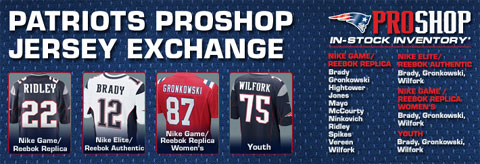
This unprecedented event garnered many headlines in itself, including this one from Bloomberg BusinessWeek, which questioned and challenged the swap event. Where wonder over such an offer to fans is not unsurprising, this story by Kyle Stock missed the main points for why the team may have made such a move, and to a reader who was unfamiliar with the team, story or the league itself, it would give them an incomplete story. After reading it I was compelled to write this post.
Let Me Be Completely Transparent
Allow me to provide my background and interest in writing this, which I believe provides greater context to this story. First and foremost, I am a Patriots fan, and as someone who grew up in Massachusetts I have followed the team since I was a kid. I am also a 19-year season ticket holder of the team, which goes beyond the current ownership of the team by Robert Kraft. My fandom also extends online to the Web site GoPats.com that myself and a friend have run since the mid 1990’s (though it has lagged the last several years, but I digress). All of this said, I have no special insight or relationship to the team. I have met Kraft before, but I don’t even have a picture to capture that moment.
Beyond my interest in the success of the team, I am looking at this jersey swap story from the standpoint of a business owner, and someone who has followed not only the team on the field but the off-field activities of the team, from their then record-setting sale price 20 years ago to the new stadium and retail and entertainment complex that surrounds it south of Boston, and all that went into taking this losing team to 3 Super Bowl championships in a decade.
I have tapped into both of these points of view in the writing of this post.
A Little Pre-Reading
Before you read on I encourage you to read the article from Bloomberg BusinessWeek and this is a link to a PDF capture of the story in the event the article link does not work. I also encourage you to read this article from the Patriots own Web site about the sale – this is a link to the page and this is a link to a PDF capture of it. As well, this is the terms of the jersey swapped, with both a link to the Patriots site and a copy of it here at The Hot Iron.
Let’s begin!
(Re)building A (Patriot) Nation
In the third paragraph of the story a comment is made to the jersey swap having “been lauded by much of Patriot Nation as ‘classy.’” The quote of classy came from a comment posted on the Patriots article page by a reader, but the more important mention is of “Patriot Nation.” Where this may have been written by the author as a tongue-in-cheek reference to Patriots fans, it certainly should not be dismissed as it encompasses all of the reasons for why this jersey swap happened.
Prior to Kraft’s purchase of the team, even despite an appearance in Super Bowl XX, the Pats would rarely sell-out a game and were a regarded lower than the other Boston sports teams. People wouldn’t openly brag about being a fan, let alone a season ticket holder. The efforts made by Kraft and his team both on and off the field were the rebirth of the team, making them the competitor they are today and elevating the team’s value to second among all NFL teams at over $1.5 billion dollars according to Forbes magazine. Fans of the team are proud to call themselves a member of Patriot Nation, whether they are from the US or internationally.
The terms of the jersey swap stated the swap must be in person at the Patriots Pro Shop adjacent to the stadium in the complex called Patriots Place in Foxboro, MA. This move by the team was brilliant, as the pro shop is a gleaming, several thousand foot complex that sells everything from jerseys and hats to furniture with the Pats “flying Elvis” logo. Though I did not see any numbers on additional sales, it would not surprise of any numbers of how many people bought additional merchandise – at full price – when they swapped their Hernandez jersey. The article reference the sales of Tim Tebow jerseys, for the quarterback which recently signed with the team, but this was a pure outsider’s assumption as the top selling jerseys were for veteran players Vince Wilfork and Tom Brady, according the Boston Globe.
The timing of the jersey swap also couldn’t have been any better, as it followed the announcement of the new typeface to accompany the team’s logo. What a better way to move “old” merchandise, especially in the off-season in preparation for the new styles – and typeface – to stock the pro shop.
By The Numbers
The article then gets into justification for why this could be a bad move, first talking about how many players have been arrested – “almost 30” – and the average length of the career of an NFL player – 3.2 years. To begin with, you will never fins a jersey or t-shirt with the name and number of every player. Only the top starts of the team are ever prepared and sold. As of this writing, on the Patriots Pro Shop’s Web site you can get prepared jerseys for 20 players, of which a few are for players who are no longer on the team. Sure you can get a custom-made jersey for any player or number (or your own name) but you will pay a premium for one. If someone is going to the extent to custom order a jersey for a particular player, they really want that player’s jersey and most likely wouldn’t be looking to return it.
Arrests are not the only reason a player’s jersey would be taken off the shelf. Retirement, injuries, free-agency signings and trades come to mind. These actions don’t typically call for a recall of jersey, and in many cases if someone doesn’t want to wear a player’s jersey, they would just leave it in the back of their closet and buy a new one. Another option I have personally seen in the past is putting duct tape over the name over the player’s name.
When considering costs associated with the jersey swap, there is no mention made in the article of actual cost. Does a jersey that retails for US$100.00 cost that much? Half that? A quarter of that? Of course the cost is nowhere near the retail cost. I do not have specific number on the average actual cost of a jersey, but recalling the experience of my Aunt (full disclosure – also a Patriots fan!) who worked in the headquarters of a retail department store for many years, she said there is plenty of markup on all clothing, which allows for plenty of markdowns as well as profit.
Following the jersey swap, the Patriots reported that it cost them US$250,000.00. The report doesn’t include any actual costs, if they were included or not, nor what they will do with the jerseys they collected. I sincerely doubt the team will sell the jerseys on eBay, as the article insinuated, as Kraft did not make his billions by such petty means, plus such an action would completely negate the “classy” goodwill the team garnered from the swap. If you simply take the $250,000 and factor it into the “more than US$3Billion” NFL merchandise market, and it is not a “pricey” percentage. By factoring where that cost of $250,000 will be charged in the team’s accounting – in marketing, merchandise or somewhere else – and the actual loss is not as large as it may appear.
Decisions, Decisions
This is not the first time the Patriots have taken action due to a player’s reputation. In 1996, the Patriots drafted and then released Christian Peter after rape allegations were found out after he was drafted by the team. A controversial move, as well, but one which the ownership felt it had to do.
Over the years I have heard sports team owners say you don’t buy a team to make money. Granted most team owners have other income sources so we should not pity them, but it takes a large investment, time, and granted some luck for a team to payoff. This eventually happened for the Patriots.
At the end of the day, any decision made by a business comes at a cost and some with a benefit as well. In the short term, these costs can have a negative impact, but as long as the overall, longer-term impact is positive, then the business will not only survive but thrive. If it doesn’t, then someone else can take over the business and continue it. This is exactly what happened with the Patriots.
I welcome your thoughts on any of this – the original article in Bloomberg Businessweek, my analysis, the Hernandez case – please leave them in the comments to this post.
This is from The Hot Iron, a journal on business and technology by Mike Maddaloni.
Did you enjoy this? Subscribe to The Hot Iron by RSS/XML feed or Read by Email.
Business • Strategize • (0) Comments • Permalink
Meeting People Is Believing In People In The Workforce
By Mike Maddaloni on Monday, June 24, 2013 at 11:50 PM with 0 comments
In this hyper-connected, telecommuting, Internet-enabled, outsourced, offshored, cloud, remote-working world, it is not uncommon to never meet people you work with. In some companies it has become almost the norm, and it is only rare exceptions where people see even a live video stream of someone, let alone meet them in the real world. For many people, this is ok.
As you may have guessed from the intonation of the previous paragraph, I am not one of those people. If anything, I make the extra effort to go out of my way to meet people whenever possible. It’s something I learned early on in my career, and it has worked not only to my advantage, but projects I have worked on over the years as well.
To Utah Or Bust
Back in the late 90’s I was consulting on what I would call the most unique, fun, learning and dynamic project of my career. Put it like this – I had over an hour’s drive each way to work and it never even phased me! Where I could write many posts on that project in itself, the project was my first end-to-end Web and service project, and eventually I was the manager of the entire technical environment.
But as the saying goes, all good things must come to an end, and in this case, the client was closing their business unit I was working at and my project was sold to another company. That company had its own development and technical resources, and my job was to transition everything from knowledge to software to hardware to the new company. To add to the logistics, the new company was outside of Salt Lake City, Utah, where I and the project was south of Boston, over 2,000 miles away.
After the client manager informed me of the changes in the project he paused and asked me what was the first thing I needed to do for the move.
I said, “I need to book a flight to Utah.”
When the client manager pressed me for details, my response was straightforward and convincing. We needed to first ship the software and data to the new company, all over the Internet, and set it up on temporary servers. Then once done we’d literally pack and ship the servers to them, then move the data back onto the old servers. Not only had none of us – the current client, new company, or me – done something like this before, but it was 1997 and not many had done something like this period.
Therefore meeting the staff at the new company that would be on the receiving end of this was crucial. It was my job to ensure that the move went smoothly and we were up and running right away. I had to know what – and who – was on the other end and that they shared my commitment to the project, were capable of working on it, and if there were issues, they shared my dedication to resolving them.
Meeting and Believing
So I booked a flight from Boston to Salt Lake City and spent a week south of the city with the team. Following our initial meet and greet, we got down to business, including touring their facilities, reviewing the project plan and made some changes based on their feedback, and discussed the transition and longer term for the project, namely as I would not be a part of it any longer. We also had lunch together and a couple of dinners and got to know each other better, along with sharing stories of past tech projects. As my flight took off for my return trip to Boston, I felt very good and confident the project would be extremely successful.
When I returned to the client the following week, the client manager asked me how it went. I first showed him a list of everybody’s name, email address, and work, home, mobile and pager numbers. Needless to say he was pleased as I went into further details on the trip and overall plan.
In the end, the transition went off smoothly. We had a few issues, such as the data transfer taking longer than anticipated, but in the end everything was up and running over the course of a weekend. The following week there was an issue with one of the temporary servers on the other end, but I worked with their team and reported back the status to the client’s client to ensure everything was under control, and soon after I reported the good news we were back up and running.
Following the transition of the server environment came the transfer of the software development, and my role on the project came to an end. Where it was bittersweet for me, I was more concerned for the people who worked for the client who were losing their jobs. Another project for me was followed by a job change and onto even more adventures.
To this day I strive to meet the people I work with in person. What worked well in 1997 seems even more important sixteen years later.
This is from The Hot Iron, a journal on business and technology by Mike Maddaloni.
Did you enjoy this? Subscribe to The Hot Iron by RSS/XML feed or Read by Email.
Business • Strategize • Technology • Web Development • (0) Comments • Permalink
Subscribe to The Hot Iron



The Hot Iron strives to present unique content and point-of-view on business, technology and other topics by Mike Maddaloni, a technology strategist based in Appleton, Wisconsin.
Photo credit: Logan Connor/Oomphotography
Value for Value
If you like what you are reading on The Hot Iron, buy me a coffee!
About Links
In posts here at The Hot Iron there are often links and banner ads for products and services. For some of these links and banner ads, I receive compensation if you click and/or eventually buy said products or services. Where most links are marked as such, it is safe to assume any link or banner ad is a compensated one.